2026-07-30
Mall Wall Advertising: How Retailers Turn Construction Barriers Into Brand Moments
By Bryce Mitchell — Founder, Rapid Retail Graphics
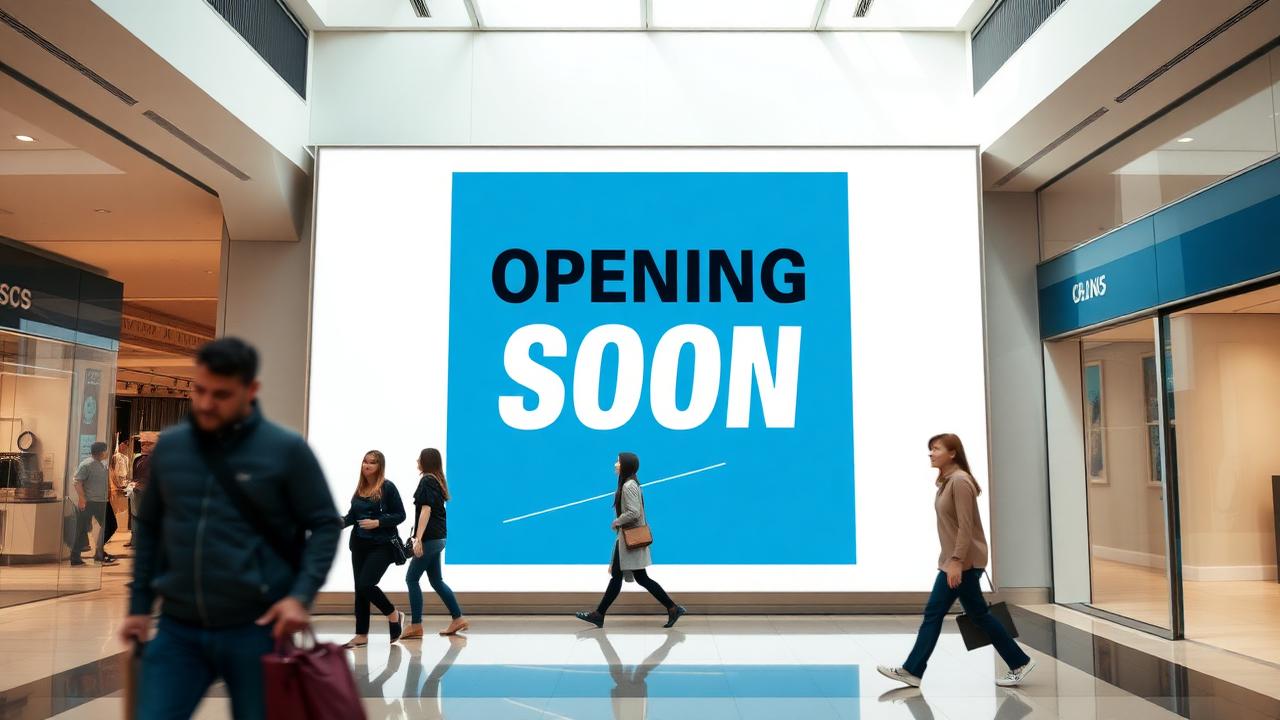
A construction barrier is not dead space. For retailers opening or renovating in a mall, that wall is the first impression hundreds of shoppers will form about your brand before a single door opens.
Done right, it becomes a genuine brand moment. Done wrong, it's a plain plywood eyesore that signals neglect and hands competitors a visual advantage.
Here's how retailers are using construction barriers as active advertising surfaces, what makes the creative actually work, and how to execute without losing weeks to vendor coordination.
What Is a Mall Wall, and Why Does It Matter?
A mall wall — also called a hoarding or construction barrier — is the temporary partition separating an active retail build-out or renovation from the public walkway. Landlords require them. Mall operations teams regulate them. And for the full duration of your build, they are the most visible real estate your brand occupies.
Foot traffic in a busy mall can run into the tens of thousands per day. Every one of those people walks past your barrier. That's not a liability. That's an audience.
Retailers who treat the barrier as a branding surface consistently report stronger opening-day foot traffic — shoppers already know the brand is coming. The wall builds anticipation before the doors open.
How Retailers Are Using Construction Barriers as Brand Advertising
Teaser Campaigns
Fashion and lifestyle brands often run a teaser campaign directly on the hoarding. Large-format imagery, a launch date, and a single brand statement do most of the work. The goal is curiosity, not information overload.
A clean visual with "Opening Soon" and a bold hero image outperforms a wall covered in small text every time. Shoppers are moving. You have about three seconds.
Campaign Creative Adapted to Panel Layouts
Retailers with active campaign creative — a seasonal launch, a product hero, a brand manifesto — can adapt those files directly to hoarding panels. This keeps the barrier consistent with everything else running across windows, digital, and in-store.
The key is working with a vendor who understands panel dimensions and can reformat files without losing the creative intent. A general print shop will often crop awkwardly or flatten the visual hierarchy. A hoarding specialist adapts the layout to the physical space.
Brand Story Walls
Some retailers use the full hoarding run to tell a story across multiple panels. A food-and-beverage brand might walk shoppers through sourcing, craft, and the menu. A health-and-beauty brand might introduce its values panel by panel.
This works best in high-dwell areas like food courts or near anchor entrances where shoppers slow down or wait. In high-traffic corridors where people are moving quickly, it tends to fall flat.
Opening Countdown
Simple but effective: build a visible countdown into the design. It creates urgency, gives repeat visitors a reason to notice the wall again, and signals to mall operations and neighboring tenants that you're on schedule.
What Makes Mall Wall Creative Actually Work
Strong hoarding creative shares a few consistent traits.
Scale-first thinking. A design that looks polished on a laptop can fall apart at 8 feet tall and 40 feet wide. Effective hoarding creative is built for physical scale from the start — not adapted from a social media asset at the last minute.
One dominant visual. The barrier is not a brochure. One strong image, one message, one brand. The shopper's eye needs somewhere to land.
Readable from 20 feet away. If the headline requires stopping to read, it won't be read. Text hierarchy matters. The brand name and primary message should be legible from across the corridor.
Durable finishes. Mall hoarding takes physical contact, cleaning chemicals, and the occasional shopping cart. A print with a durable cleanable finish holds up through a 6 to 12 week build. Standard banner material won't.
The Operational Reality: Why Creative Alone Isn't Enough
A great design on a poorly installed wall doesn't deliver the brand moment you planned. The operational side of mall wall advertising is where most projects run into trouble.
Mall Landlord Approval
Every major mall landlord — Cadillac Fairview, Oxford, Ivanhoe Cambridge — has standards for hoarding materials, finishes, and installation methods. Getting the creative approved is one step. Getting the physical installation approved is another. The landlord-by-landlord requirements breakdown covers what each property expects.
If your vendor isn't familiar with those requirements, you'll face revision requests, installation delays, and potential fines. A two-day delay on a hoarding install can push your opening date. That's not a minor risk.
After-Hours Installation
Most mall operations teams require installation outside trading hours. That means coordinating with security, managing loading dock access, and having a crew that can work efficiently in a compressed overnight window.
A vendor who hasn't done this before will underestimate what's involved. The result is an incomplete install, a rescheduled crew, and a barrier that's still plywood when the mall opens in the morning.
Turnaround Time Against Lease Timelines
Lease timelines don't flex. If you're three weeks from opening and don't have a hoarding vendor confirmed, you're already behind. The average project — from site survey to installed wall — should take 1 to 5 business days with a vendor who has the capacity and process to deliver it.
That timeline is achievable, but only with a vendor who handles survey, artwork, print, and installation in a single workflow rather than handing off between separate companies. See how it works end-to-end in this 48-hour mall brand launch case study.
Single-Vendor vs. Multi-Vendor Execution
Leasing coordinators and retail project managers are already managing multiple workstreams. Adding a separate design agency, print vendor, and installation crew to the hoarding project creates three more points of failure.
A single vendor who handles the full scope — site survey, artwork, print, and coordinated installation — removes that burden entirely. You provide your brand files and your project dates. The vendor delivers an installed wall.
This isn't a premium option. For a project budget of $5,000 to $30,000, single-vendor execution is the standard expectation. The question is whether your vendor can actually deliver it within your timeline.
What to Look for in a Mall Wall Vendor
These are the questions that matter when you're evaluating vendors.
Do they publish their pricing? Vendors who don't will quote high once they know your timeline is tight. A published price floor — around $6 per square foot inclusive of print and standard installation — signals confidence in their cost structure.
What is their turnaround commitment? Ask for a specific number of business days, not "we'll do our best." If they can't commit to a timeline, they can't protect yours.
Do they handle mall landlord coordination? This isn't a given. Ask specifically whether they're familiar with the landlord standards at your property.
Can they install after hours? Confirm this before signing anything. Not every print vendor has a crew that can work overnight in a mall environment.
Do they work with existing brand files? You shouldn't need to rebuild your creative from scratch. A capable vendor adapts your existing campaign assets to the panel layout.
For a detailed look at what installation inside an active mall actually involves, the guide on installing branded construction barriers without disrupting shoppers walks through the coordination steps.
What It Costs in 2026
Mall wall costs vary by square footage, material, and whether installation is included. The most common source of budget surprise is vendors who quote print and installation separately, then layer on site survey, artwork, and logistics fees afterward.
A reliable benchmark for 2026 is approximately $6 per square foot, inclusive of print and standard installation. A typical retail hoarding run of 400 to 600 square feet puts the project between $2,400 and $3,600 at that rate. Rush timelines and larger formats will affect the final number.
Rapid Retail Graphics publishes its pricing and turnaround and offers an instant estimate calculator on the site so you can get a real number before the first conversation.
FAQs
What is a mall wall in retail?
A mall wall, or hoarding, is the temporary construction barrier installed around a retail build-out or renovation. It separates the active construction zone from the public walkway and is required by most mall landlords. Retailers use it as a branded advertising surface to build awareness before opening.
How much does mall wall advertising cost?
In 2026, a typical mall wall project runs approximately $6 per square foot inclusive of print and standard installation. A 400 to 600 square foot hoarding run typically falls between $2,400 and $3,600, though rush timelines and larger formats will affect the final price.
How long does it take to install a branded construction barrier?
With a full-service vendor, the average timeline from site survey to installed wall is 1 to 5 business days. Rush options are available for tighter timelines.
Do mall landlords need to approve the hoarding design?
Yes. Most major mall landlords — including Cadillac Fairview, Oxford, and Ivanhoe Cambridge — have specific standards for hoarding materials, finishes, and installation methods. Your vendor should be familiar with those requirements before production begins.
Can I use my existing campaign creative for a mall wall?
Yes. A hoarding specialist can adapt your existing brand files and campaign creative to the panel layout without rebuilding the design from scratch. The key is working with a vendor who understands large-format print dimensions and can maintain your creative hierarchy at scale.
When should I confirm a hoarding vendor?
Ideally at lease execution or renovation kick-off. If you're already within three weeks of your opening date and don't have a vendor confirmed, start immediately. A 1 to 5 business day turnaround is achievable — but only if the vendor has capacity when you need it.
What's the difference between a hoarding specialist and a general print shop?
A general print shop handles a wide range of formats and may have no experience with mall landlord requirements, after-hours installation, or large-format panel layouts. A hoarding specialist works primarily in construction barrier graphics and understands the operational realities of mall environments.
Start With the Wall
Your construction barrier goes up before your store does. It's the first thing shoppers see, the first impression your brand makes in that location, and the only marketing surface you control during the build.
Treating it as a brand moment rather than a compliance requirement costs the same amount of money. The difference is entirely in how you use it.
Get an instant estimate for your next mall wall project.
Have a hoarding project coming up?
Get a Quote