2026-10-18
Retail Brand Compliance Graphics: Approvals Without Delays
By Bryce Mitchell — Founder, Rapid Retail Graphics
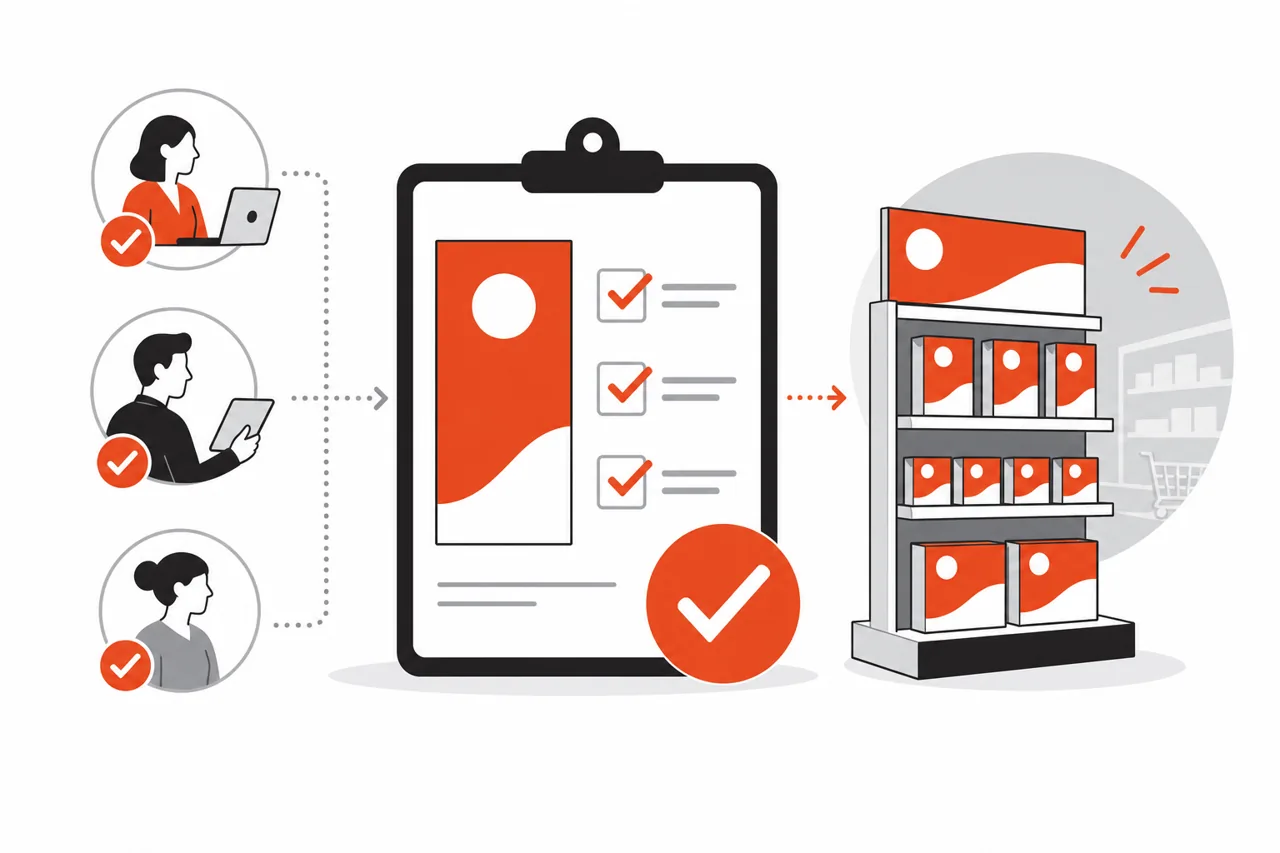
Retail brand compliance graphics are store-level visuals — including signage, hoarding panels, and wall graphics — that must match approved brand standards before installation. Barricade graphics is the US term; hoarding graphics is used in Canada. Delays happen when approvals run through email threads, skip technical checks, or split print and installation across separate vendors. A structured workflow from artwork brief to on-site sign-off cuts those delays significantly.
The stakes are concrete. A campaign that misses its launch window because a landlord rejected a file, or because the wrong logo version shipped to six stores, costs more than a reprint. It costs the opening moment.
What Brand Compliance Means for Retail Graphics
Brand compliance means checking the artwork against the client's approved brand files and the property's current requirements before printing. Confirm logos, colours, wording and the layout against the final dimensions so the print team receives a clear, approved version.
Hoarding requirements vary by property. Request the current criteria from the leasing or mall operations contact and confirm how artwork approval and installation access are handled.
How Approval Delays Hurt Campaign Performance
Slow approvals push launch dates. That is the direct consequence, and it compounds fast across a multi-location program.
Feedback spread across separate email threads can make it difficult to identify the approved file. Keep comments with the artwork version they refer to, name the final approver and record the sign-off before handing files to production.
Delays trigger reprints, after-hours installation fees, and wasted management time. A clear approval process helps identify these risks before artwork production starts.
How to Build a Retail Brand Compliance Graphics Workflow in 5 Steps
A reliable approval workflow follows the same sequence every time. Skipping a step, or reordering them, is where revision loops start.
- Write a complete artwork brief before production starts. Confirm panel dimensions, the current property requirements, approved wording and any project-specific language or accessibility requirements. A brief that covers these before a designer opens a file prevents the most common round of revisions.
- Produce artwork against confirmed measurements, not estimates. Use site-verified dimensions. If measurements come from a lease drawing rather than a physical survey, flag that explicitly in the brief and build in a tolerance check before sending files to print.
- Run a technical review against the landlord's standards document. Check file the requested file format, dimensions and any property-specific restrictions on imagery or messaging. For hoarding graphics specifically, the Cadillac Fairview and Oxford Properties hoarding standards compliance guide provides context for property-specific submissions. Resolve every technical flag before the file moves to stakeholder review.
- Route for stakeholder approval through a single platform, not email. A structured review process keeps feedback together with the file version it concerns. Assign clear roles: who can comment, who can approve, and who has final sign-off authority. Watermark pending files so no one installs an unapproved version.
- Confirm installation logistics before the job leaves the print facility. Coordinate with mall operations on access windows, confirm that installation falls outside trading hours, and verify that the site is ready to receive panels. Confirm any required contractor registration and insurance documents with the property in advance. A file that clears every approval step still fails if the installation crew arrives at a site that is not ready.
Can Local Teams Customise Graphics Without Breaking Brand Rules?
Yes, with the right structure. The model that works for multi-location retail programs locks core brand elements at the template level and opens specific layout zones for local adaptation.
Locked elements typically include the logo, primary typeface, approved colour palette, and any legally required disclosures. Editable zones cover store-specific details: address, hours, a localised promotional message. This approach lets a regional team update a wall graphic for their location without touching anything that would fail a brand audit.
Keep a master template and a list of fields that local teams may change. Route changes through the same final approval process and keep the approved files labelled by location. Software can support this process, but a shared tool is not a substitute for a named approver and a recorded sign-off.
For custom retail graphics that need to stay consistent across dozens of locations, the template-and-lock model helps teams review local changes without losing the approved brand elements.
Quoting Wall Graphics Across Multiple Retail Stores
Wall graphics are quoted per project. Share the location list, confirmed dimensions, artwork variations and installation requirements so the quote reflects the scope at each store.
Reusable artwork can simplify coordination, but different wall dimensions, site conditions and access arrangements still need to be considered. Confirm these before setting a rollout schedule.
Rapid Retail Graphics manages site surveys, artwork production, large-format print, and coordinated on-site installation under one contract for multi-location retail programs. Consolidating those steps under one vendor keeps the handoff between artwork, print and installation within a coordinated scope. For a detailed look at how multi-location programs are structured, the multi-location hoarding graphics rollout page covers the coordination model.
FAQs
Conclusion
Retail brand compliance graphics fail the approval process for predictable reasons: files built to estimated rather than surveyed dimensions, email threads that lose version control, and print and installation vendors that do not coordinate with each other or with mall operations. A five-step workflow from brief to installation sign-off addresses each of those failure points in order.
Start by confirming your landlord's current standards document and your site dimensions before any artwork is produced. Route approvals through a platform that timestamps feedback and watermarks pending files. If you are managing a multi-location program, consolidating print and installation under one vendor can simplify the production and installation handoff.
Ready to scope a project? Get an instant estimate or request a detailed quote — or call (604) 220-7700.
Have a hoarding project coming up?
Get a Quote