2026-07-28
Point-of-Sale Display Design Near Construction Zones: Keeping Customers Engaged During Renovation
By Bryce Mitchell — Founder, Rapid Retail Graphics
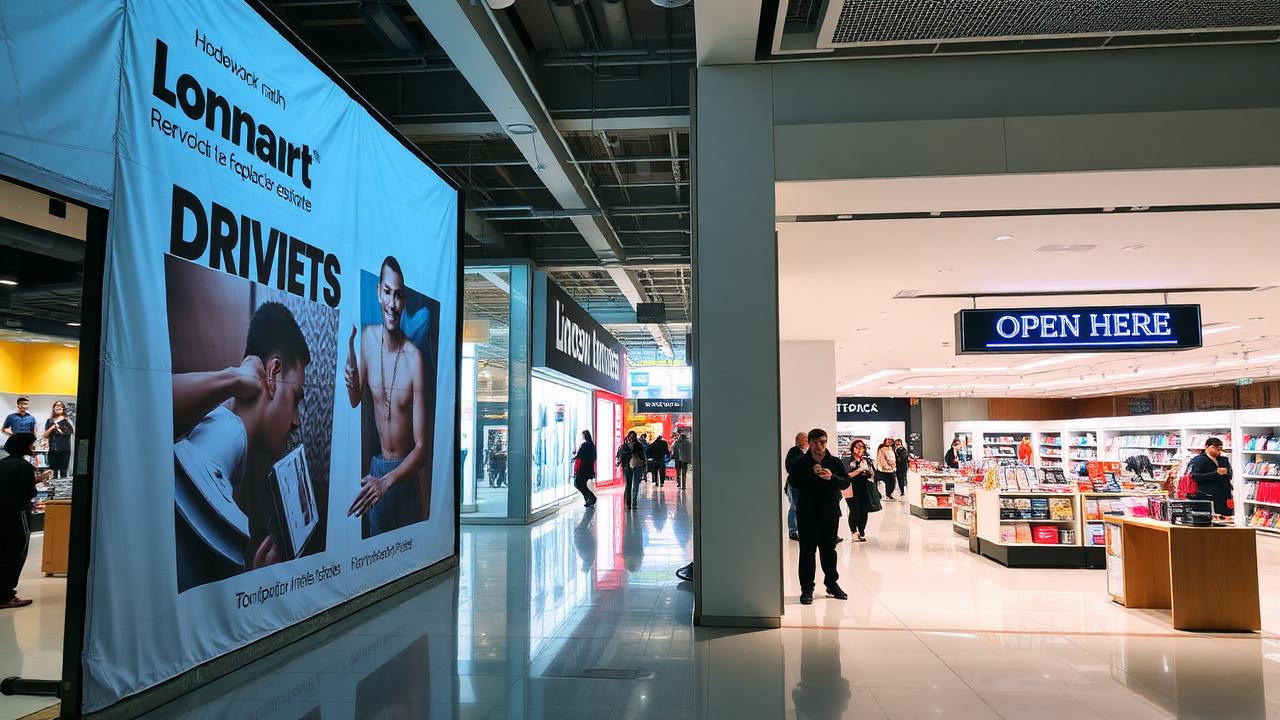
Renovation is one of the most disruptive things that can happen to a retail environment. Noise, dust barriers, blocked sightlines — all of it works against you. But the construction zone itself doesn't have to work against your sales floor. With the right approach to point-of-sale display design near active construction, you can keep foot traffic moving, protect brand perception, and give shoppers a reason to stay engaged rather than turn around.
This article is for leasing coordinators, retail project managers, and brand teams managing an active renovation or store opening in a mall environment. If you're 2 to 6 weeks out from a handover and trying to keep the space functional and on-brand while the build happens behind the hoarding, this is for you.
Why Construction Zones Hurt Engagement (and What You Can Do About It)
Shoppers make fast decisions about whether to approach a retail space. A bare construction barrier with no visual information reads as "closed" or "not worth stopping for." That perception costs you foot traffic even when part of your store is still trading.
The fix isn't complicated, but it requires intentional design. Every surface near the construction zone is an opportunity — to redirect attention, reinforce the brand, and give shoppers a reason to keep moving toward your active selling area.
The Hoarding Panel Is Your First Point-of-Sale Display
Most teams treat the hoarding as a compliance requirement. It's actually the largest available display surface in the mall corridor.
A well-designed hoarding panel can carry campaign creative, product imagery, a launch countdown, or a teaser for the new space. Shoppers walking past a branded, high-resolution hoarding are receiving a brand impression equivalent to a large-format window display. Treat it that way.
If your brand has an active campaign, those files can be adapted to panel layouts without starting from scratch. If you're mid-renovation on a new location, a teaser concept built around the opening date gives passersby something to anticipate rather than ignore.
Designing Point-of-Sale Displays That Work Alongside Construction
When part of your floor is inaccessible, the remaining selling area has to work harder. Here's how to approach display design in that context.
Redirect Traffic With Intentional Signage
Construction zones create dead zones. Shoppers who hit a blocked path often turn around rather than look for an alternative route. Clear directional signage placed at decision points — before shoppers reach the barrier — keeps them moving toward your active floor.
This isn't wayfinding for its own sake. It's a point-of-sale opportunity. A sign that says "Open Here" or "Shop the New Collection This Way" does two things at once: it solves the navigation problem and re-engages the shopper with a product message.
Concentrate Display Density Near the Active Entry
When your footprint is reduced, move your best-performing displays closer to the entry point that's still accessible. This is not the time for minimalist spacing. Shoppers who walk into a partially renovated space will self-select out quickly if the first thing they see is empty floor.
Anchor the entry with a strong hero display. Put your highest-margin or highest-interest product within the first few feet of the threshold. Give shoppers something to engage with immediately.
Use the Barrier as a Visual Cue, Not Just a Physical One
The hoarding panel facing your active selling floor can serve as a backdrop for in-store displays. If the construction wall sits behind your display fixtures, treat it as part of the visual composition. A branded hoarding with consistent color and typography creates a coherent environment rather than a makeshift one.
This matters more than it might seem. Shoppers in a renovation environment are already primed to notice inconsistency. A polished hoarding that matches your in-store creative signals that the brand is in control of the situation — not just managing around it.
What Goes on the Hoarding: A Practical Framework
Not all hoarding creative serves the same purpose. Here's a simple framework for deciding what goes on each panel.
Corridor-facing panels: Your highest-impression surfaces. Use campaign creative, product photography, or a launch message. The goal is to stop a shopper who wasn't planning to visit your space.
Entry-adjacent panels: Seen by shoppers who are already approaching. Use these to set expectations, communicate what's open, and build anticipation for the new space.
Interior-facing panels (if applicable): If hoarding is visible from inside your active selling area, use it to reinforce the brand environment and keep messaging consistent with your in-store creative.
If you're working with an existing campaign, those files can be adapted to fit panel dimensions without losing the integrity of the original design. If you need to build something new, a teaser concept focused on the opening date is usually the fastest path to something that works.
For a broader look at how renovation and relocation projects differ in their hoarding requirements, the comparison between hoarding graphics for renovations versus relocations covers what changes and what stays consistent across both scenarios.
Timing: When to Update Display Creative During a Long Renovation
A renovation that runs 6 to 12 weeks creates a specific problem: the hoarding creative that felt fresh in week one looks stale by week eight. Shoppers who pass the same panels repeatedly stop registering them.
Refreshing hoarding creative at the midpoint of a long renovation keeps the space feeling active and gives you a second opportunity to build anticipation before opening. Seasonal timing is another natural trigger — if your renovation spans a major retail period, aligning a creative refresh with that season keeps the panels relevant rather than dated.
Knowing when to update your store's hoarding graphics is a practical question with a direct impact on how your space is perceived throughout the construction period.
Mall Operations Compliance: The Part That Kills Timelines
None of this works if your hoarding installation gets rejected by mall operations. Landlord-specific requirements from Cadillac Fairview, Oxford Properties, and Ivanhoe Cambridge cover panel dimensions, fixing methods, fire ratings, and after-hours installation windows. Missing any one of these can push your install date back by days.
The safest approach is to work with a vendor who already knows those requirements and builds them into the project from the start. Installation scheduled outside trading hours, coordinated with mall operations and security, removes both the disruption risk and the compliance risk in one step.
For a detailed walkthrough of managing a mall hoarding installation without disrupting shoppers or running into operations issues, this guide to installing branded construction barriers in a mall covers the process step by step.
Getting the Hoarding Done Without Adding to Your Vendor List
The biggest practical problem with hoarding during a renovation is that it adds a coordination task to a project that already has too many moving parts. You're managing the build contractor, the fit-out schedule, the lease handover date, and the marketing team's approval process. Adding a separate printer and a separate install crew creates two more points of failure.
A single vendor who handles site survey, artwork adaptation, print production, and installation as one coordinated delivery removes that burden entirely. Rapid Retail Graphics delivers installed hoarding graphics in 1 to 5 business days from survey to completed install, at approximately $6 per square foot inclusive of print and standard installation. Rush options are available when the timeline is tighter — see pricing & turnaround for the full breakdown.
If you have existing brand files, they can be adapted to panel layouts. If you're starting from a campaign concept, the artwork can be built to fit. Either way works. Get an instant estimate or get in touch.
FAQs
What is a point-of-sale display in the context of a construction zone?
In a retail renovation environment, a point-of-sale display refers to any branded visual element near the active selling area or construction barrier that's designed to engage shoppers and direct them toward a purchase. This includes hoarding panels, directional signage, and in-store displays concentrated near the accessible entry.
How do you keep customers engaged when part of a store is under construction?
The most effective approach combines branded hoarding creative on the construction barrier, directional signage at decision points before shoppers reach the blocked area, and concentrated display density near the active entry. Each element addresses a different stage of the shopper's path through the space.
Can hoarding panels be updated during a long renovation?
Yes. Hoarding creative can be refreshed at any point during a renovation. For projects running 6 weeks or longer, updating panels at the midpoint — or aligning a refresh with a seasonal moment — keeps the space feeling active and maintains shopper attention.
What information should go on construction hoarding panels?
Corridor-facing panels should carry high-impact campaign creative or product imagery to capture passing foot traffic. Entry-adjacent panels should communicate what's open and build anticipation for the new space. Interior-facing panels should reinforce the in-store brand environment.
How long does it take to get branded hoarding installed in a mall?
With a full-service vendor, the process from site survey to completed installation typically takes 1 to 5 business days. Rush options are available for tighter timelines. Installation is scheduled outside trading hours to avoid disrupting mall operations.
What mall landlord requirements affect hoarding installation?
Requirements vary by landlord but typically cover panel dimensions, fixing methods, fire rating specifications, and permitted installation windows. Landlords including Cadillac Fairview, Oxford Properties, and Ivanhoe Cambridge each have specific standards that must be met before installation is approved. Working with a vendor familiar with those requirements prevents delays.
How much does branded hoarding installation cost?
Pricing starts at approximately $6 per square foot, inclusive of print and standard installation. Final pricing is confirmed after reviewing site photos and drawings. An instant estimate calculator is available at rapidretailgraphics.com.
A renovation doesn't have to mean lost engagement. The construction barrier is a display surface. The corridor outside your hoarded space is a marketing channel. Design it that way, get it installed on time, and the construction period becomes part of the brand story rather than a gap in it.
Have a hoarding project coming up?
Get a Quote