2026-08-17
Retail Wall Graphics vs. Hoarding Graphics: When Each Approach Is the Right Call
By Bryce Mitchell — Founder, Rapid Retail Graphics
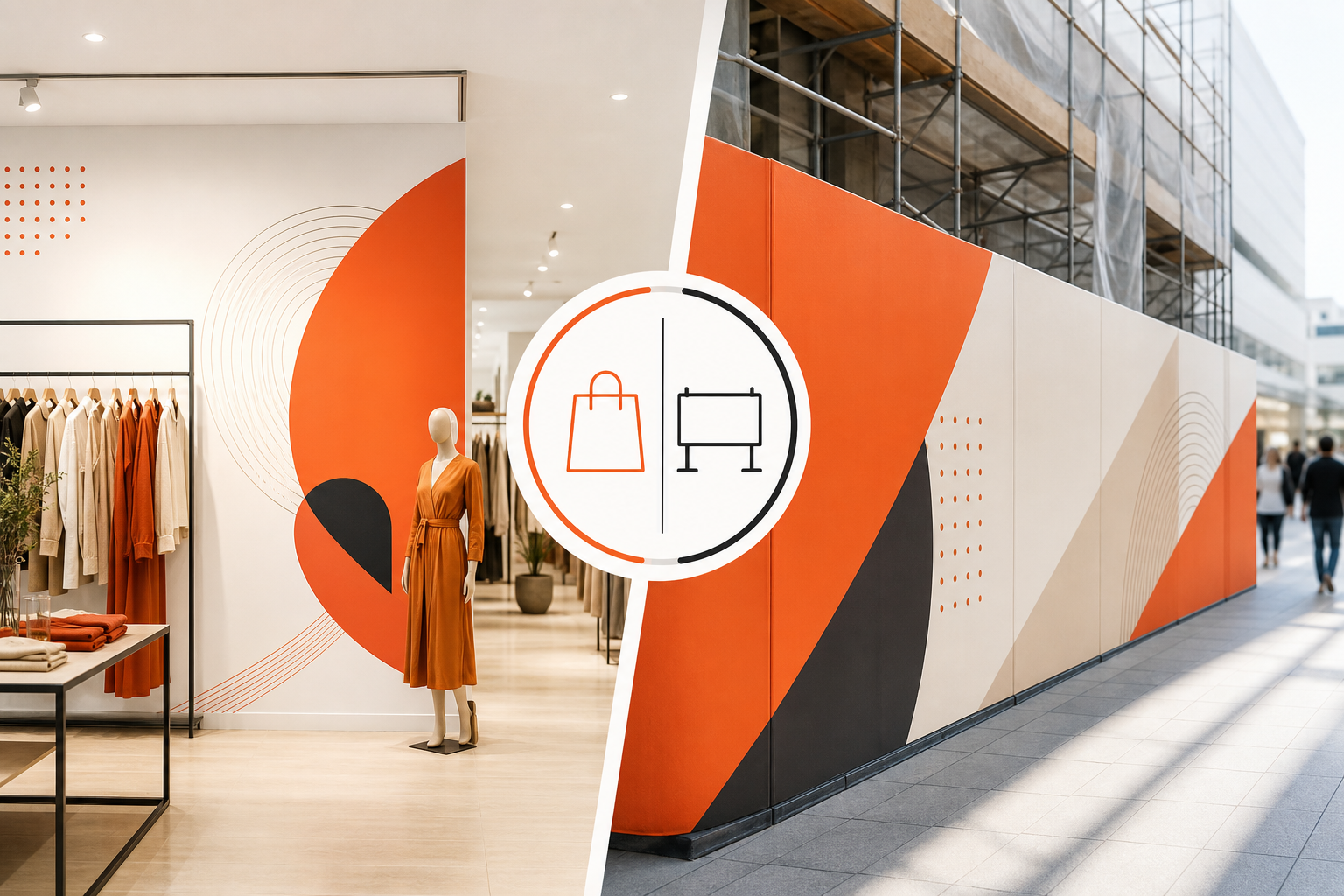
Not every retail graphics decision works the same way. A brand refreshing its store interior has completely different needs than a retailer opening behind a construction barrier in a busy mall. Both projects involve graphics on walls, but the materials, approval processes, timelines, and objectives are worlds apart.
Here's a clear breakdown of how retail wall graphics and hoarding graphics actually differ — and how to figure out which one fits your situation.
What Are Retail Wall Graphics?
Retail wall graphics are printed or applied visuals installed directly on interior walls, windows, or surfaces inside an open, trading store. Think seasonal campaign imagery behind a checkout counter, a brand mural on a feature wall, or window graphics promoting a sale.
These graphics are designed for customers who are already inside the store or passing an open storefront. The goal is usually brand expression, product promotion, or seasonal storytelling.
Common Uses for Retail Wall Graphics
- Interior brand murals and feature walls
- Window decals and frosted film
- Seasonal promotional displays
- Wayfinding and directional signage
- Product launch or campaign imagery on interior surfaces
Retail wall graphics are typically semi-permanent or temporary by design. A seasonal window display might run for six weeks. A brand mural might stay up for a year or more. What defines them is that they live inside a functioning retail space.
What Are Hoarding Graphics?
Hoarding graphics are large-format printed panels applied to construction barriers — also called hoardings — that enclose a retail space during a fit-out, renovation, or new store build. They face outward into the mall corridor or street, seen by foot traffic passing a closed space.
The purpose is fundamentally different. Hoarding graphics aren't decorating an open store. They're covering an unavoidable construction zone and turning a blank barrier into a branded moment. A well-executed hoarding keeps a brand visible and credible during the weeks or months when the doors are shut.
For a plain-language explanation of what hoarding means in a retail context, this guide for brand teams and leasing staff covers the basics clearly.
Common Uses for Hoarding Graphics
- New store openings in shopping malls
- Store renovations and full fit-outs
- Lease handovers between tenants
- Brand relaunches requiring a closed-store period
- Temporary enclosures during major retail refurbishments
The Key Differences Side by Side
| Dimension | Retail wall graphics | Hoarding graphics |
|---|---|---|
| Audience and viewing context | Customers already inside or in front of an open store | Mall foot traffic passing a closed, enclosed space |
| Installation environment | Finished interiors — painted drywall, glass, treated panels | Raw barriers — plywood, MDF, metal hoarding panels |
| Approval and compliance | Usually covered by the store's own fit-out approvals | Landlord and mall management sign-off on content and materials |
| Timeline pressure | Planned refresh cycles with some schedule flexibility | Time-critical — barrier up means graphics needed now |
| Cost structure | Varies widely by material, finish, and complexity | Priced per square foot (around $6/sqft print, substrate, install) |
Audience and Viewing Context
Retail wall graphics speak to customers inside or directly in front of an open store. The viewer is already engaged — or at least open to engagement.
Hoarding graphics speak to foot traffic passing a closed space. That viewer may not know the brand is coming, may be a regular customer who is now inconvenienced, or may simply be walking past. The job of hoarding graphics is to hold attention and build anticipation when the brand has no other presence in that space.
Installation Environment
Retail wall graphics go up in a finished, operational space. Installers work around fixtures, staff, and sometimes customers. Surfaces are typically smooth — painted drywall, glass, or treated panels.
Hoarding graphics go onto raw construction barriers: often plywood, MDF, or metal hoarding panels. Surface conditions vary, and measurements need to account for the actual barrier structure, not a finished wall. That's why a proper site survey matters before production begins.
Approval and Compliance
Interior graphics generally fall under a store's own fit-out approvals. Hoarding graphics sit in common mall areas and require landlord sign-off. Mall management typically has strict guidelines covering materials, graphic content, and how the hoarding integrates with the surrounding corridor.
The approval path for hoarding is more involved than most brands expect. The regulatory and landlord approval differences between retail signage and hoarding graphics are worth understanding before you brief a supplier — especially when you're working to a tight opening date.
Timeline Pressure
Retail wall graphics are usually part of a planned store refresh or fit-out, where there's often some schedule flexibility.
Hoarding graphics are almost always time-critical. A construction barrier going up in a mall without graphics reflects poorly on both the brand and the landlord. The window between barrier installation and the need for finished graphics can be very short, and suppliers who can't move fast create real problems.
Rapid Retail Graphics delivers branded hoarding within 1 to 5 business days, from site survey through to installation. That speed matters when a lease handover happens faster than expected or a fit-out schedule shifts at the last minute.
Cost Structure
Interior retail wall graphics vary widely in cost depending on material, finish, and complexity. Premium finishes, fabric systems, or illuminated elements can push costs up significantly.
Hoarding graphics are typically priced by the square foot, covering print, substrate, and installation. At around $6 per square foot, the cost is predictable and scales cleanly based on the linear footage of the barrier.
When Retail Wall Graphics Are the Right Call
Choose retail wall graphics when:
- Your store is open and trading
- You're refreshing interior brand expression or running a campaign
- You need graphics that work alongside fixtures, lighting, and product displays
- Installation can happen during trading hours or a planned closure
- You're working with finished interior surfaces
This is the right tool for active brand storytelling inside a functioning space.
When Hoarding Graphics Are the Right Call
Choose hoarding graphics when:
- Your space is under construction, renovation, or fit-out
- A construction barrier is already in place or about to go up
- You need to maintain brand visibility during a closed period
- Installation must happen outside mall trading hours to avoid disruption
- You're working with raw barrier surfaces that need a site survey before production
Hoarding isn't a consolation prize for a closed store. Done well, it builds anticipation, keeps the brand present in the mall, and signals to shoppers that something worth waiting for is on the way.
The article on temporary retail graphics versus permanent signage explores this further if you're weighing longer-term signage decisions alongside a construction period.
Can You Use Both at the Same Time?
Yes — and many retail projects do. A brand opening a new location might have hoarding graphics on the exterior barrier while interior wall graphics are being installed as part of the fit-out. The two serve different audiences and different purposes simultaneously, so there's no conflict in running both.
What matters is not treating them as interchangeable. Using interior retail graphic materials on an exterior hoarding, or applying hoarding-scale production methods to a small interior feature wall, creates unnecessary cost and complexity without any real benefit.
What to Ask Before You Brief a Supplier
A few questions will save time regardless of which approach you're taking:
- Is the space open or closed during installation?
- What surfaces will the graphics be applied to?
- Does the project require landlord or mall management approval?
- What's the actual deadline, and what happens if production or installation slips?
- Does the supplier handle installation, or will you need to coordinate that separately?
For hoarding projects, that last question carries real weight. Managing print production and installation as separate vendor relationships during a tight fit-out timeline adds friction you don't need. Rapid Retail Graphics handles the full process — including coordinated installation outside trading hours — so mall operations aren't disrupted and clients aren't chasing multiple contacts when timelines are already tight.
Planning a fit-out or store opening?
Tell us the barrier length and your handover date, and we'll come back with a fixed quote and an install window that fits your schedule.
Request a hoarding graphics quote →FAQs
What is the difference between retail wall graphics and hoarding graphics?
Retail wall graphics are applied to interior surfaces inside an open, trading store. Hoarding graphics are applied to construction barriers enclosing a closed retail space. They serve different audiences, require different materials, and follow different approval processes.
Can retail wall graphic materials be used on construction hoardings?
Not reliably. Construction barriers are often raw plywood or metal panels with uneven surfaces and heavy foot traffic exposure. Materials designed for finished interior walls may not adhere properly or hold up in that environment. A site survey before production helps ensure the right materials are specified.
How long does it take to produce and install hoarding graphics?
Timelines vary by supplier. Rapid Retail Graphics delivers branded hoarding within 1 to 5 business days from site survey through to installation — which matters when fit-out schedules are tight or shift unexpectedly.
Do hoarding graphics require landlord approval in a mall?
Yes, in most cases. Mall management typically has guidelines covering graphic content, materials, and how the hoarding integrates with the surrounding common area. This approval step needs to be factored into your project timeline from the start.
How is hoarding graphics pricing typically structured?
Hoarding graphics are usually priced by the square foot, covering print, substrate, and installation. That makes budgeting straightforward once you know the linear footage of the barrier.
Who manages installation for hoarding graphics?
It depends on the supplier. Some print and ship, leaving installation to the client. Others, like Rapid Retail Graphics, coordinate installation directly — including scheduling outside trading hours to avoid disrupting mall operations.
When should a retail brand use both retail wall graphics and hoarding graphics?
When a new store is being built out, a brand may need hoarding graphics on the exterior barrier while interior wall graphics are installed as part of the fit-out. The two serve different purposes and different audiences at the same time, so using both is common and straightforward.
Knowing which approach fits your project is the first step. The second is working with a supplier who can actually deliver on the timeline that retail and mall environments demand.
Have a hoarding project coming up?
Get a Quote