2026-09-23
Rapid Displays Chicago vs National Hoarding Vendors Compared
By Bryce Mitchell — Founder, Rapid Retail Graphics
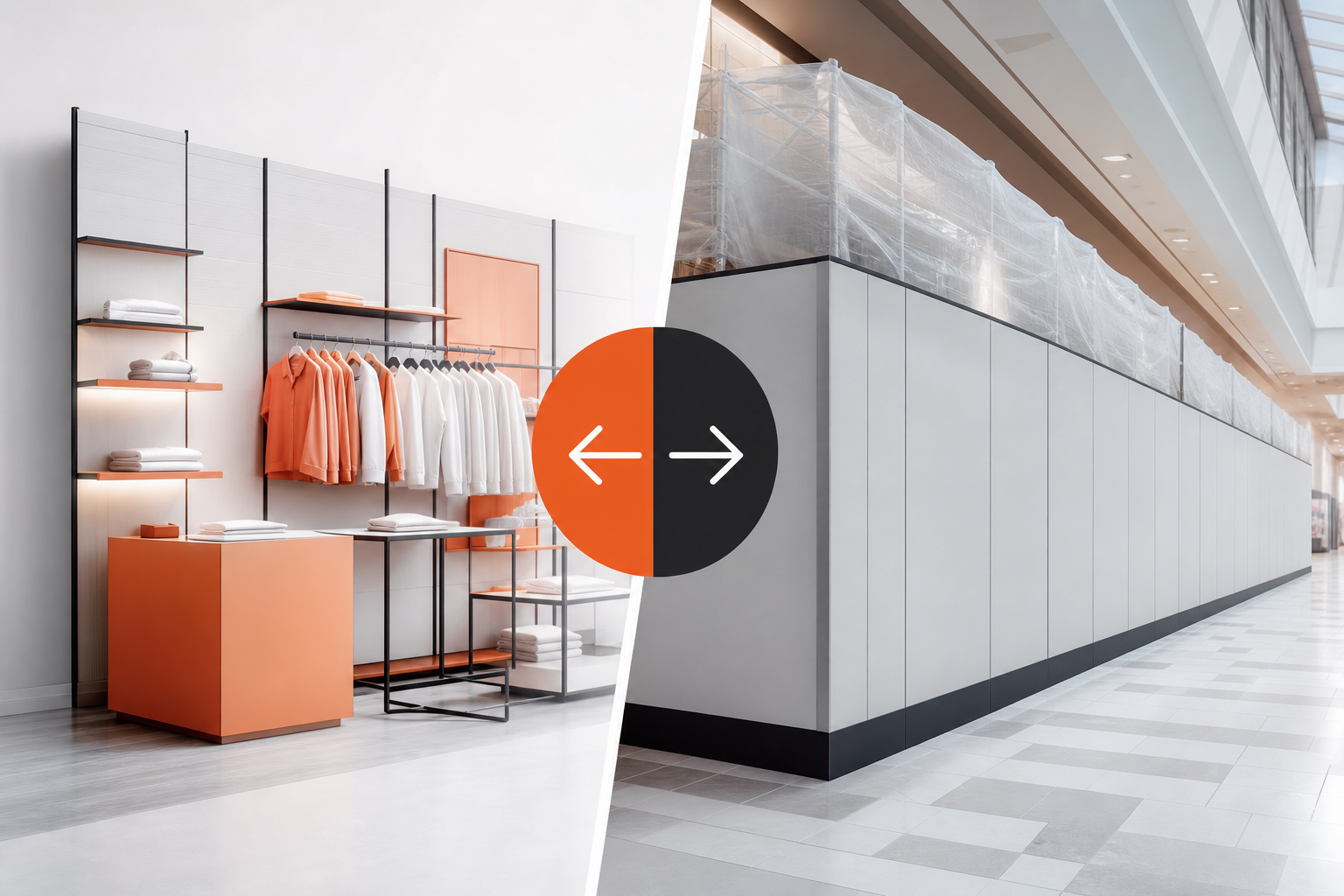
You searched for Rapid Displays Chicago, which means you're probably evaluating vendors for a retail construction hoarding project and trying to understand what your options actually look like side by side. This article does that comparison directly — covering what Rapid Displays is, where it fits in the hoarding vendor landscape, and how it stacks up against national vendors that specialize in construction barrier graphics.
What Rapid Displays Chicago Actually Is
Rapid Displays is a point-of-purchase display and retail fixtures manufacturer based in Chicago, with roots going back to 1938 according to CB Insights, Owler, and manufacturing-today.com. In its 2019 announcement, Gemspring Capital noted the company had over 1 million square feet of manufacturing and distribution space across Chicago and the San Francisco Bay Area following an acquisition by a Gemspring affiliate. CB Insights records a subsequent merger with Outform on April 22, 2021.
That history matters here. Rapid Displays is a large-scale manufacturing operation focused on permanent and semi-permanent retail displays — fixtures, pop displays, in-store merchandising units. It is not a construction hoarding specialist.
If you searched "Rapid Displays Chicago" while planning a store opening, a renovation, or a lease handover with a hard opening date, you're likely looking at the wrong category of vendor. Construction hoarding — the branded barrier panels that wrap a fit-out in progress inside a mall — is a different product, a different workflow, and a different vendor relationship than retail display manufacturing.
The Hoarding Brief vs the Display Manufacturing Brief
The two categories look adjacent. They operate nothing alike.
A retail display manufacturer like Rapid Displays takes a brief, produces a physical fixture or display unit, and ships it. The timeline is measured in weeks or months. The output is a durable, reusable product.
A hoarding graphics project runs on a completely different clock. You have a lease handover date, a fit-out start, and a store opening date. Panels need to be measured, designed to landlord spec, printed, and installed — often within a window of a few days. Mall operations sets the installation window, usually outside trading hours. The general contractor has the site for a limited period. Nothing waits.
That's the brief. That's the challenge. And it requires a vendor built around that workflow, not a manufacturing operation built around fixture production.
National Hoarding Vendors: How They Compare
When you're sourcing a hoarding vendor for a Chicago mall location — or a multi-location program across North America — the field narrows quickly once you apply the criteria that actually matter: end-to-end scope, speed, and geographic coverage.
SpeedPro
SpeedPro is a nationwide franchise network with local presence in most major markets, including Chicago. The franchise model gives you a local contact, but it also means service quality varies by location. SpeedPro franchisees are generalist print shops that handle some hoarding work. They don't publicly advertise a standardized turnaround for construction hoarding projects, and tight construction timeline management isn't a core part of their positioning.
For a one-off banner or event graphic, a local SpeedPro works. For a mall hoarding program with a landlord approval package and an after-hours install window, the generalist model creates coordination risk. A detailed breakdown of that tradeoff is covered in the comparison of Rapid Retail Graphics vs. SpeedPro for Canadian mall projects, which applies equally to U.S. locations.
Blast Media
Blast Media is Canada-based and positions itself around luxury retail hoarding at premium mall locations. If your project is at a flagship property and budget isn't the primary constraint, Blast Media is a credible option. Competitive analysis suggests their pricing runs above standard hoarding rates, though exact figures aren't publicly confirmed. Their focus is the high-end segment — which means mid-market projects, the majority of store openings and renovations, fall outside their sweet spot.
The full-service comparison between Blast Media and Rapid Retail Graphics covers scope and service model differences in more detail.
AGRetail
AGRetail specializes in retail and mall barricade graphics and has a strong portfolio — Sephora Times Square is one of their documented projects. The limitation is geography. AGRetail is California-based and doesn't publicly advertise in-house site survey capability or a 3-to-5-day turnaround. For a Chicago project, you're working with a West Coast vendor managing a Midwest installation, which adds coordination layers.
Dynamic Resources
Dynamic Resources operates at enterprise scale with 3M-certified installers — a meaningful credential for large, complex installs. It also comes with enterprise pricing and a procurement process that doesn't match the operational speed most hoarding projects require. Mid-market retail brands and regional mall landlords typically find the cost and process overhead disproportionate to the project scope.
Craftsmen Industries
Craftsmen Industries covers retail graphics broadly. That breadth is also the limitation: hoarding is one of many things they do, not the core of their operation. When a vendor isn't specialized, the institutional knowledge that makes a hoarding program run smoothly — landlord approval workflows, after-hours install coordination, panel layout standards — tends to be thinner.
What a Hoarding-Specific Vendor Looks Like
Most options in this category either stop at print and leave installation to you, subcontract the install to a third party, or lack the geographic reach to handle a multi-location program consistently.
The criteria that separate a functional hoarding vendor from a print shop with some hoarding experience:
- Site survey capability — in-house measurement and template production, not reliance on client-supplied drawings that may be inaccurate
- Artwork adaptation — the ability to take existing brand files and adapt them to hoarding panel layouts without losing brand fidelity
- Print production — large-format, substrate-appropriate output produced in-house
- Coordinated installation — not subcontracted, scheduled around mall operations approval windows, performed outside trading hours
- Lead time — a realistic, advertised turnaround that fits a construction timeline, not a manufacturing timeline
Rapid Retail Graphics covers all of those stages under one roof. Average install lead time is 3 to 5 business days, with rush options available. Pricing runs approximately $6 per square foot, inclusive of print and standard installation — though final pricing is confirmed after reviewing site photos and drawings. The service operates across North America, including Chicago and surrounding markets.
If you're managing a program across multiple locations — say, a chain opening several stores across Midwest malls in the same quarter — the single-vendor model eliminates the coordination overhead of managing separate print, design, and installation vendors for each site. That overhead doesn't sound significant until a vendor misses a landlord approval window and the fit-out clock is still running. That falls to you.
Chicago Specifically: What Matters for Local Projects
Chicago's mall market includes properties managed by Simon, Oxford Properties, and other major landlords, each with their own hoarding standards and approval processes. Mall operations teams set the installation windows. General contractors set the handover schedule. Your hoarding vendor needs to fit into that workflow — not create a separate coordination track.
A vendor with no Chicago presence or no experience navigating Midwest landlord approval packages adds risk to a project that already has a fixed end date. Geographic coverage matters not just for the install, but for the site survey that determines whether your panel layout actually fits the lease line.
For a sense of project scope and cost before you've committed to a vendor, the instant estimate calculator at rapidretailgraphics.com gives you a working number based on your square footage.
Vendor Selection Criteria: A Practical Framework
When evaluating hoarding vendors for a Chicago project or a national program, these are the questions that surface the real differences:
- Scope: Does the vendor handle site survey, artwork, print, and installation, or do they stop at print? If they stop at print, who manages the install — and how does that get coordinated with mall operations?
- Lead time: What is the actual turnaround from signed agreement to installed panels? Is that figure advertised, or do you find out after you've committed?
- Installation model: Is the install crew in-house or subcontracted? Is after-hours installation standard or an add-on?
- Landlord approval experience: Has the vendor worked with your specific landlord before? Do they understand what the approval package requires?
- Artwork handling: Can they work from your existing brand files, or do they require print-ready files in a specific format? What happens if your files need adaptation?
- Geographic coverage: If this is one of several locations in a program, can the same vendor handle all of them consistently?
The comparison between Rapid Retail Graphics and AmGraph Retail applies several of these criteria directly and is worth reading if you're evaluating multiple vendors at once.
The Practical Takeaway
Rapid Displays Chicago is a legitimate, large-scale retail display manufacturer with a long history in the industry. If you need point-of-purchase displays, fixtures, or permanent in-store merchandising units, they have the manufacturing infrastructure to support it.
If you need branded construction hoarding installed inside a Chicago mall — or across multiple North American locations — that's a different category. The vendor you need specializes in the fit-out window, the landlord approval process, and the after-hours install. Not fixture manufacturing.
Get a project estimate before you've committed time to a vendor that may not be built for this scope. The calculator at rapidretailgraphics.com takes less than two minutes.
Frequently Asked Questions
Have a hoarding project coming up?
Get a Quote