2026-05-04
How Landlords Can Standardize Hoarding Graphics Across a Mall Portfolio in 2026
By David Chen — Senior Account Manager, 12+ Years in Retail Property Graphics
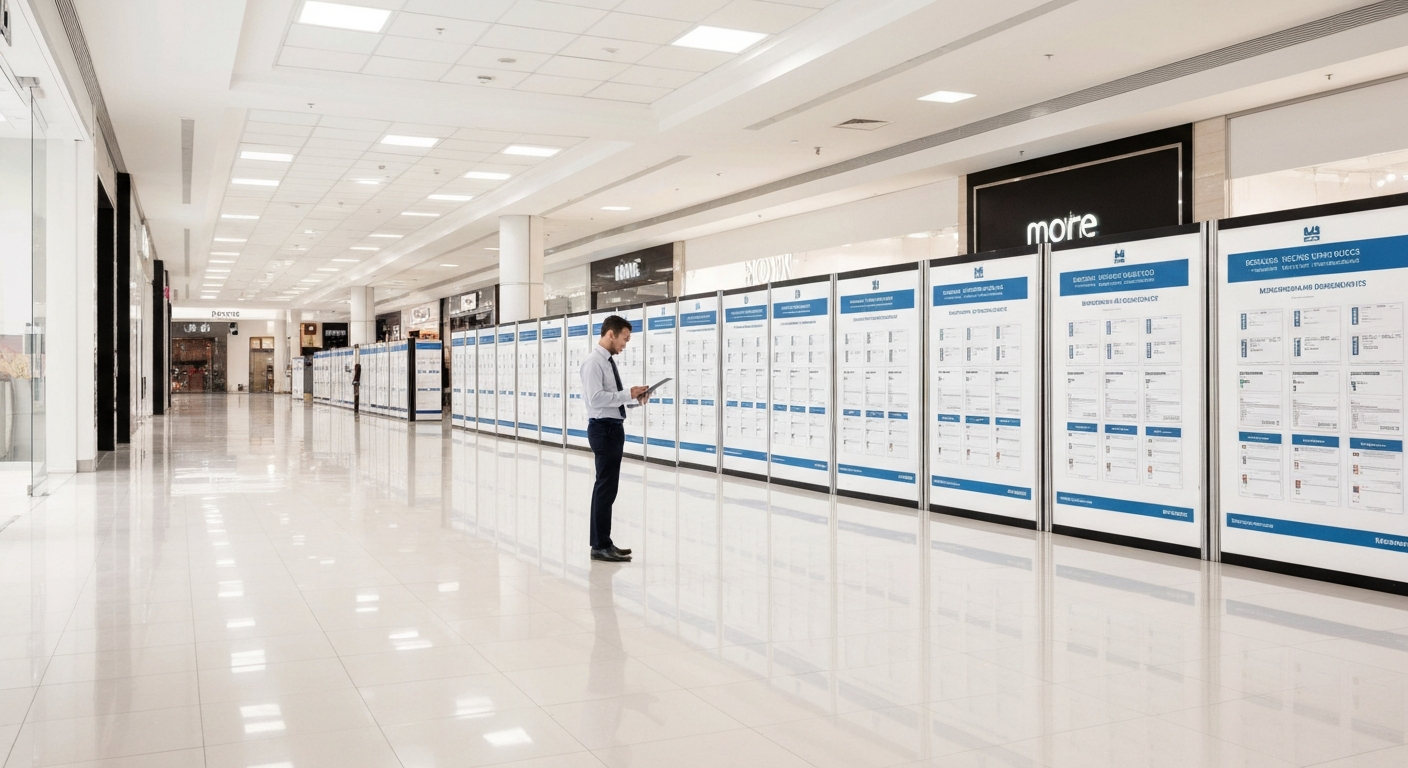
You manage five, ten, maybe fifteen properties. At any given time, there are active fit-outs across several of them. And right now, the hoarding graphics across those properties are almost certainly priced differently, produced to different specs, and installed by vendors with varying degrees of familiarity with your mall operations teams.
That inconsistency has a cost. It shows up in re-dos, compliance disputes, and the hours your leasing coordinators spend chasing quotes and approvals that should already have a process behind them.
Here's how to fix it — specifically, how to standardize hoarding graphics across a mall portfolio in a way that controls costs, reduces friction, and keeps brand quality consistent from one centre to the next.
Why Portfolio-Wide Standardization Is a Pricing and Operations Problem
Most landlords treat hoarding graphics as a per-project problem. A tenant opens, someone gets a quote, a vendor gets hired, the wall goes up. Repeat at the next location.
That approach works until you're managing volume. At scale, the absence of a standard means every project carries discovery costs — new measurements, new vendor negotiations, new approval workflows. You pay for that inefficiency every time.
The pricing problem compounds quickly. Without a fixed rate structure, vendors quote based on urgency and perceived leverage. A tenant with a hard opening date in 10 days pays more than one with 30 days of lead time, even when the job is identical. Across a portfolio, that variance adds up to real money that nobody is tracking.
Standardization isn't about reducing quality. It's about removing the variables that drive unnecessary cost and delay.
The Real Cost of Inconsistent Vendor Management
When each property sources its own hoarding vendor, accountability fragments. The Cadillac Fairview property in one city uses a local print shop. The Oxford-managed centre in another uses whoever the tenant's brand team selected. The Ivanhoé Cambridge location is still waiting on a quote.
None of those vendors know your mall operations protocols. None of them have existing relationships with your security teams. And when something goes wrong — a graphic installed during trading hours, a substrate that doesn't meet fire code, a panel that won't adhere to the hoarding system in place — your operations staff absorbs the problem.
Re-printing and re-shipping costs time and money. Worse, it usually means the barrier goes up bare while the redo is in production.
For a closer look at how access coordination affects installation outcomes, the guide to coordinating hoarding graphics installs with mall security and operations covers the specific protocols most centres require.
Building a Hoarding Graphics Standard Across Your Portfolio
Standardization has three components: a materials standard, a documentation standard, and a pricing standard. You need all three for the system to hold.
Define Substrate and Finish Requirements by Property Tier
Not every property in your portfolio carries the same foot traffic, aesthetic standard, or hoarding system. A flagship urban centre warrants a different specification than a regional mall with a plywood panel system.
That said, you can define tiers. A typical two-tier approach looks like this:
- Tier 1 (flagship/high-traffic): Full-colour large format print on rigid substrate, matte laminate finish, panel-to-panel colour matching required, minimum print resolution specified.
- Tier 2 (regional/standard): Full-colour print on semi-rigid substrate, matte or gloss laminate acceptable, standard panel system dimensions.
Documenting these tiers removes ambiguity for tenants and vendors alike. A vendor quoting a Tier 1 job knows exactly what's expected before they submit a number.
Create a Master Specification Document for Tenants
Your leasing coordinators spend real time answering the same questions from tenants and their brand teams: What are the dimensions? What finish is required? Who approves the artwork? When can installation happen?
A master specification document answers all of that. It should include:
- Panel dimensions for each hoarding system in use across your portfolio
- Approved substrates and finishes by property tier
- Artwork submission requirements and approval contacts
- Installation access windows (outside trading hours, contractor access lead times)
- Compliance requirements specific to each province or municipality
This document becomes an attachment to your lease or fit-out package. It saves time on both sides of every transaction.
For leasing coordinators newer to hoarding requirements in Canadian shopping centres, the leasing coordinator guide to hoarding graphics in Canadian shopping centres covers the baseline knowledge that makes these conversations faster.
Establish a Rate Card That Holds Across Locations
This is where pricing standardization actually happens. A rate card is a pre-negotiated price per square foot that applies across your portfolio when a preferred vendor is engaged.
The market rate for full-service hoarding graphics — print and standard installation — sits around $6 per square foot for most Canadian mall projects. A portfolio agreement can lock that rate regardless of project size, location, or lead time (within reason), eliminating the variance that comes from per-project quoting.
A rate card also makes budgeting predictable. Your leasing team can estimate hoarding costs at the lease stage rather than discovering them mid-fit-out. The instant estimate calculator is a useful baseline for forecasting before a formal rate card is in place.
Coordinating Approvals and Access Across Multiple Centres
Even with a materials standard and a rate card in place, approvals and access remain a coordination challenge at scale. Each property has its own operations team, its own security protocols, and its own scheduling constraints.
The practical answer is a single point of contact on the vendor side who manages cross-property coordination. One vendor relationship, one communication channel, one team that already knows the access requirements at each of your centres.
Most malls require a formal contractor access request at least 48 to 72 hours in advance. A vendor managing multiple properties in your portfolio should be tracking those windows proactively — not waiting for your team to remind them.
Installation outside trading hours is standard practice for most mall projects. Confirming that expectation upfront, and having it reflected in your rate card, prevents last-minute scheduling conflicts that delay openings.
When Tenants Source Their Own Vendors
Some tenants will push back on a preferred vendor requirement. Their brand team has an existing relationship with a print supplier, or their agency handles all production. That's a legitimate position.
The answer isn't to block it. The answer is to hold the standard regardless of who produces the work. Your specification document applies whether the vendor is your preferred supplier or the tenant's. If the substrate is wrong, the graphic doesn't go up. If the artwork hasn't been approved, installation doesn't happen.
This is where a clear approval workflow matters. Require print-ready artwork submission at least 5 business days before the scheduled install date. That gives your team time to flag compliance issues without creating an emergency.
For retail chains managing multiple locations simultaneously, the tenant-side coordination challenges are covered in detail in the multi-location hoarding graphics guide for Canadian retail chains.
How a Preferred Vendor Relationship Changes the Math
A preferred vendor relationship isn't just about price. It's about removing the coordination overhead your team currently absorbs on every project.
When a vendor already knows your panel systems, your access protocols, and your approval contacts at each property, lead times compress. A 1 to 5 business day turnaround from artwork approval to completed installation is achievable when the groundwork is already in place. Without it, that same job takes longer because every step involves a new conversation.
The operational benefit compounds across a portfolio. With 20 active fit-outs in a quarter, the difference between a vendor who knows your properties and one who doesn't is measured in hours of your team's time per project.
For properties where hoarding graphics refresh on a seasonal or campaign cycle, the seasonal retail refresh guide covers the timing decisions that affect both cost and brand consistency.
FAQs
The Next Logical Step
If your portfolio currently runs on per-project quoting and ad hoc vendor selection, start with documentation. Define your substrate tiers, write your specification document, and establish a rate card with a vendor who already knows Canadian mall environments.
That work pays back quickly — fewer re-dos, faster approvals, and leasing coordinators who spend their time on leasing rather than chasing print quotes.
Rapid Retail Graphics works directly with landlords and leasing teams across North America. To scope a portfolio agreement, run an instant estimate or request a detailed quote — or call (604) 220-7700.
Have a hoarding project coming up?
Get a Quote