2026-07-13
Hoarding Graphics Vendors in the US: How Rapid Retail Graphics Compares to Local Print Shops
By Bryce Mitchell — Founder, Rapid Retail Graphics
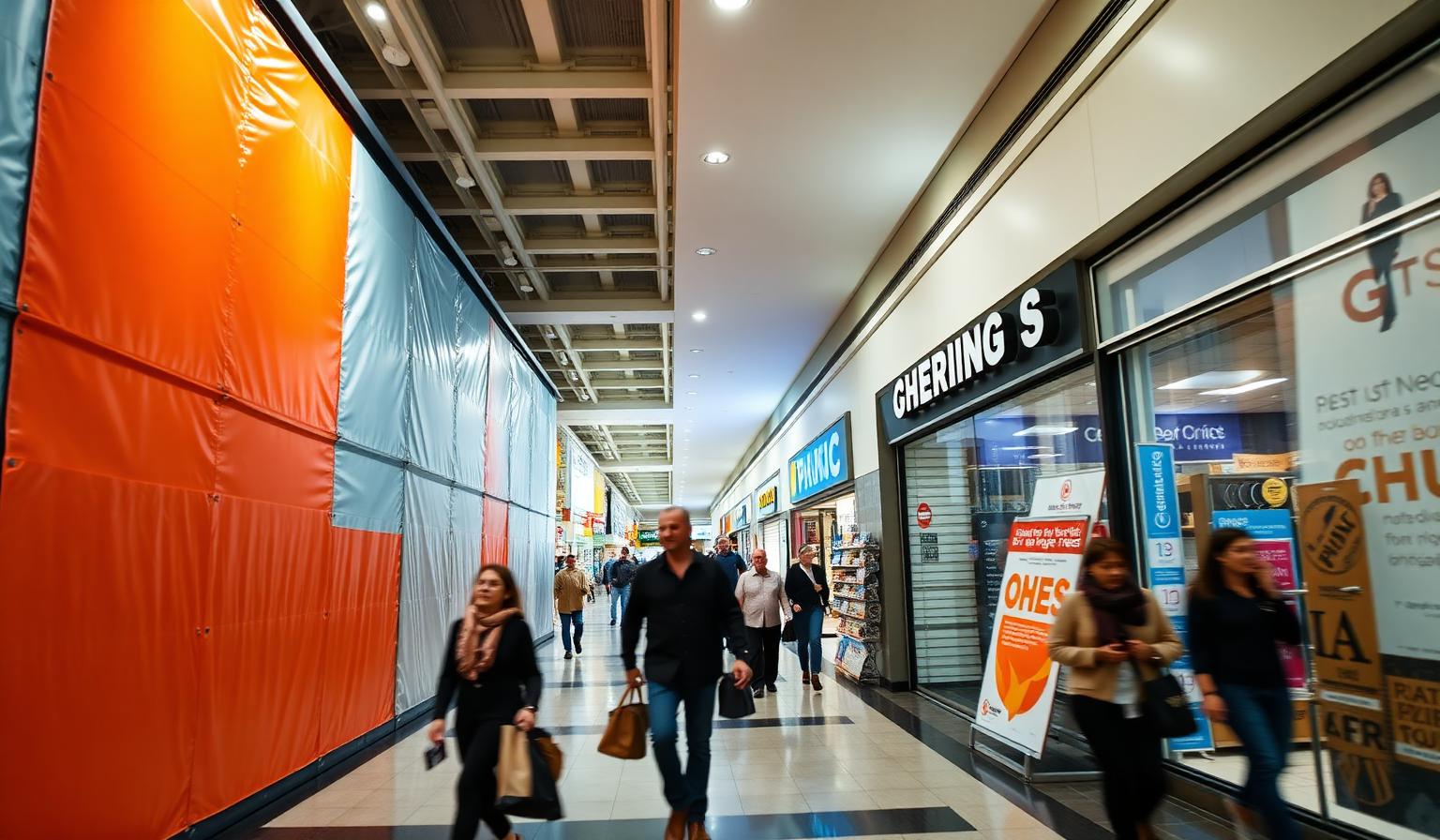
When a lease is signed and the construction timeline is set, you have one job: get branded hoarding on that wall before the store opens. The vendor you choose determines whether that happens on time.
Most US mall projects that miss their hoarding deadline don't fail because of print quality. They fail because someone assumed a local print shop could handle the full scope. That is not a safe assumption.
This article compares Rapid Retail Graphics against generalist large-format print shops on the four factors that actually determine project outcomes: turnaround, mall ops coordination, pricing transparency, and accountability.
The Four Factors That Determine Whether a Hoarding Project Lands on Time
Turnaround
The clock starts when the lease is signed — not when artwork is approved and a printer is booked.
Rapid Retail Graphics operates on a 3 to 5 business day lead time from first contact to completed install. Rush options exist for tighter windows. That number is stated upfront, not estimated after a back-and-forth intake process.
A local print shop quotes print production time. That is not the same thing. Print turnaround at a generalist shop might be 2 to 3 business days — but that number excludes site measurement, artwork adaptation, substrate procurement, and install crew scheduling. Each of those steps adds time. Each involves a different vendor or subcontractor. Every handoff is a point where the timeline can slip.
The failure mode here is treating "print turnaround" as equivalent to "project turnaround." They are not the same number, and conflating them is how opening dates get missed.
Mall Ops Coordination
This is where generalist print shops consistently fall short — and the factor most clients underestimate before their first missed install window.
Mall ops teams control site access. Most US regional malls require advance notice of 48 to 72 hours minimum. They require a valid COI naming the property owner before any crew sets foot on-site. Install windows are typically restricted to overnight or early morning hours to avoid disrupting active shoppers. Some properties require artwork approval before printing begins.
A local print shop prints. It doesn't know your mall's access protocols. It doesn't have an existing relationship with mall security. It won't submit your COI or negotiate an access window. That coordination falls back to you.
Rapid Retail Graphics handles mall ops coordination as part of the standard scope. Installs are scheduled outside trading hours. COI and access requests are managed by the team. You provide the location and the dates. The rest is handled.
If you're managing 10 or more tenant transitions per year across multiple properties, the time cost of coordinating that access yourself — on every project — adds up fast.
Pricing Transparency
Generalist print shops typically quote per-panel or per-linear-foot for print only. Installation is a separate line item, often from a subcontractor. Site measurement may or may not be included. Artwork adaptation is frequently billed as hourly design work.
By the time the final invoice arrives, the project cost looks nothing like the original quote.
Rapid Retail Graphics prices at approximately $6 per square foot, inclusive of print and standard installation. That number is confirmed after reviewing site photos and drawings, but it's the working figure you can use for budget planning. An instant estimate calculator is available on the pricing page if you want a number before making any calls.
There's no separate design fee for adapting your existing brand files to hoarding dimensions. There's no subcontractor markup on the install crew. The price covers the full scope.
Complex sites, unusual substrates, or multi-wall configurations will affect final pricing. But the model is transparent, and the number is stated upfront rather than assembled from a series of separate quotes.
Accountability
When a project involves three separate vendors, accountability is distributed. The designer says the files were approved. The printer says the panels were delivered. The installer says the access window wasn't confirmed. Nobody owns the outcome.
The failure mode here is fragmented vendor relationships on a deadline-driven project. When something goes wrong at 11pm during an overnight install, you need one phone number that covers everything. A local print shop doesn't provide that.
Full-service means one engagement covers site survey, measurements, artwork production, print, and install. If something needs to be corrected on-site, the same team that printed it is standing in front of the wall. That's the accountability structure that holds under pressure.
Where Local Print Shops Make Sense
This isn't a blanket dismissal of generalist printers. They serve a real market.
If you need a single banner for a pop-up event, a local print shop is the right call. If your team has an in-house designer, a confirmed install crew, and an established relationship with mall ops, you can source print-only from a generalist and manage the rest yourself.
That logic breaks down when the project involves a construction hoarding wall inside an active mall, a fixed lease date, brand files that need adapting to an irregular layout, and a property management team with specific access requirements. That combination is where specialists exist for a reason.
How Rapid Retail Graphics Fits the US Market
Rapid Retail Graphics operates across North America with active service delivery in New York, Los Angeles, Chicago, Dallas, Miami, and Houston, among other markets. This is not a Canada-only operation. If you've read the comparison of the vendor landscape in the Canadian market, the same service model applies to US mall projects.
The company works directly with mall landlords and leasing coordinators managing multiple transitions per year, as well as retail brand managers opening or renovating stores. Both get the same scope: one engagement, one point of contact, one invoice.
For leasing coordinators managing a high volume of tenant transitions, that structure removes the coordination burden entirely. You're not chasing a designer, a printer, and an installer separately. You're making one call.
For retail brand managers, the team works with your existing files or builds artwork from scratch to fit the hoarding dimensions. Brand standards are maintained. Photo documentation is provided on completion.
The Comparison in Plain Terms
| Factor | Local Print Shop | Rapid Retail Graphics |
|---|---|---|
| Turnaround commitment | Print only, typically 2–3 days | 3–5 business days, survey to install |
| Mall ops coordination | Not included | Included, handled by the team |
| Pricing model | Print quoted separately from install | ~$6/sq ft, print and install inclusive |
| Artwork adaptation | Billed as hourly design work | Included in scope |
| Single point of accountability | No | Yes |
| Rush options | Depends on shop capacity | Available |
| Geographic coverage | Local only | North America-wide |
A Note on Other Specialists
The US hoarding market does include a small number of specialists beyond generalist print shops. AGRetail handles retail barricade graphics but operates primarily out of California, which limits coverage for projects in other regions. SpeedPro is a nationwide franchise network, but the franchise model produces variable service quality and the business is not specialized in construction hoarding. For a detailed breakdown of how the franchise model affects project outcomes, see the comparison between Rapid Retail Graphics and SpeedPro.
The gap in the market is a nationwide specialist serving mid-market mall landlords and retail brands with speed, transparent pricing, and full-service project ownership. That's the position Rapid Retail Graphics occupies.
Before You Commit to Any Vendor
Whether you're evaluating Rapid Retail Graphics or another option, there are specific questions worth asking before you sign off on a vendor for a mall hoarding project. Turnaround commitment, COI handling, mall ops experience, and artwork ownership are the four areas where vendor differences become visible before the project starts — not after.
For a structured way to run that evaluation, the 8 questions to ask before committing to a hoarding graphics vendor covers the full checklist. The questions apply equally to US and Canadian projects.
Get a Quote
If you have a project date and a location, that's enough to start. Rapid Retail Graphics handles the rest from there.
Get an instant estimate on the pricing page, or contact the team directly to confirm scope and timeline for your specific site.
FAQs
Have a hoarding project coming up?
Get a Quote